A torn ACL can leave you wondering whether your knee will ever feel dependable again. You might be able to walk without much difficulty, yet feel uneasy about running, turning quickly or returning to the sport you enjoy. For some people, the injury happens during football or tennis.
ACL Reconstruction Surgeon Harpenden: Expert Care for Knee Ligament Injuries
For others, it follows a simple misstep that catches the knee at the wrong angle. If you are looking for an ACL Reconstruction Surgeon Harpenden, the priority is to understand the injury properly and find the treatment most likely to meet your needs.
At Herts Hip & Knee, Mr Ravi Popat provides specialist assessment and treatment for knee conditions, including ligament injuries, with surgical and non-surgical options considered for each case.
When a Knee Injury Needs More Than Rest
An ACL injury can be easy to underestimate in the first few days.
The knee swells, walking is uncomfortable, and you naturally reduce your activity. As the pain settles, you may assume the problem is resolving. Then you try to turn quickly or return to exercise, and the knee feels as though it might give way.
That instability is often the part people find most troubling.
The anterior cruciate ligament sits inside the knee and helps control its stability, particularly during movements involving rotation and sudden changes of direction. When it tears, the knee may no longer cope with these movements as reliably as before.
Some people manage everyday activities reasonably well despite an ACL tear. The difficulty becomes more apparent when they run, jump or play sports that involve pivoting. Others experience instability during ordinary movements.
The injury can also occur alongside damage to the meniscus, cartilage or other ligaments. This is one reason persistent symptoms should not be dismissed as a simple sprain.
If your knee remains swollen, feels unstable or has not recovered as expected, a specialist assessment can help establish what has happened and whether further investigation is needed.
ACL Reconstruction Surgeon Harpenden: Getting the Diagnosis Right
Before discussing an operation, your consultant needs to establish the nature and extent of the injury.
The appointment will usually begin with your account of what happened. Was there a sudden change of direction? Did you feel a pop in the knee? Did swelling develop quickly? Has the knee given way since the injury?
Your consultant will examine the knee, assessing its movement and stability. An MRI scan may be needed to confirm the ACL tear and check for damage to other structures.
The findings need to be considered together. A scan can show a torn ligament, but it cannot, by itself, determine how the injury affects your daily life or whether reconstruction is the best option.
Consider two people with similar MRI findings. One wants to return to competitive football and finds that the knee repeatedly gives way. The other has no interest in pivoting sports and can manage everyday activities without instability. Their treatment decisions may be quite different.
Your occupation, activity level, general health, previous injuries and expectations all have a part to play.
A good consultation should leave you with a clear explanation of the diagnosis, the available treatments and the reasons for recommending one approach over another.
Does Every ACL Tear Require Reconstruction?
No, and this is an important distinction.
An ACL tear does not automatically mean that surgery is necessary. Some patients can manage their injury with physiotherapy, muscle strengthening and changes to activities that place excessive demands on the knee.
Rehabilitation aims to improve strength, balance, movement and the muscles’ ability to support the joint. For selected patients, this may provide enough stability for the activities they want to continue.
Reconstruction is more likely to be considered when the knee continues to give way, particularly if the patient wants to return to sports involving sudden turns, jumping or changes of direction. Associated injuries may also influence the decision.
The question is not simply whether the ligament is torn. It is whether the knee can function reliably without reconstruction, given the demands you place on it.
This is where advice from an ACL Surgeon Harpenden can be valuable. You can discuss the likely benefits and limitations of both surgical and non-surgical management before committing to treatment.
Surgery should have a clear purpose. That purpose might be to improve stability for sporting activity, address persistent giving way or form part of the treatment for a more complex knee injury.
What Happens During ACL Reconstruction?
When reconstruction is recommended, the damaged ligament is replaced with a graft, usually taken from a tendon in your own body. The appropriate graft depends on your circumstances and the surgeon’s assessment.
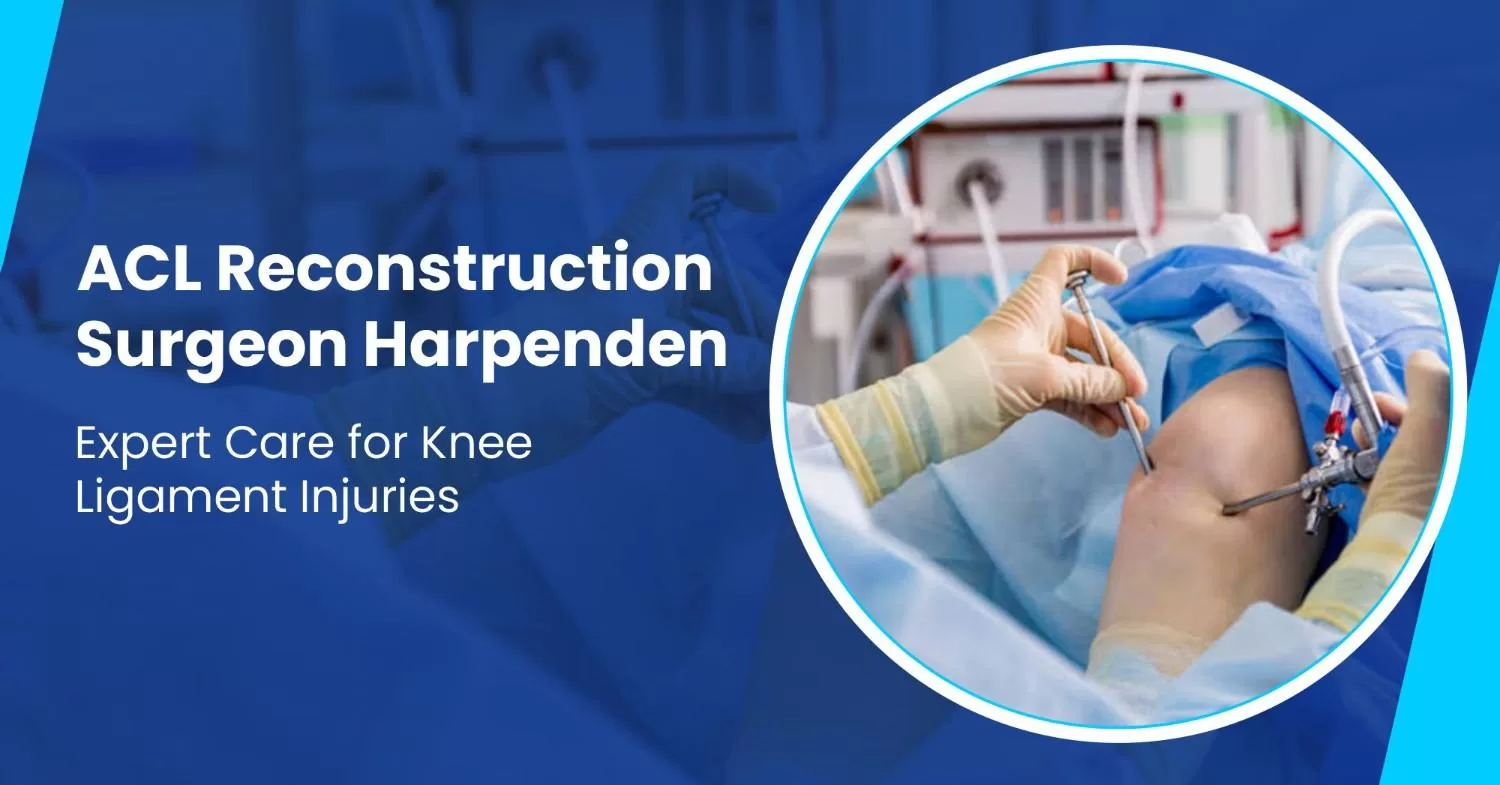
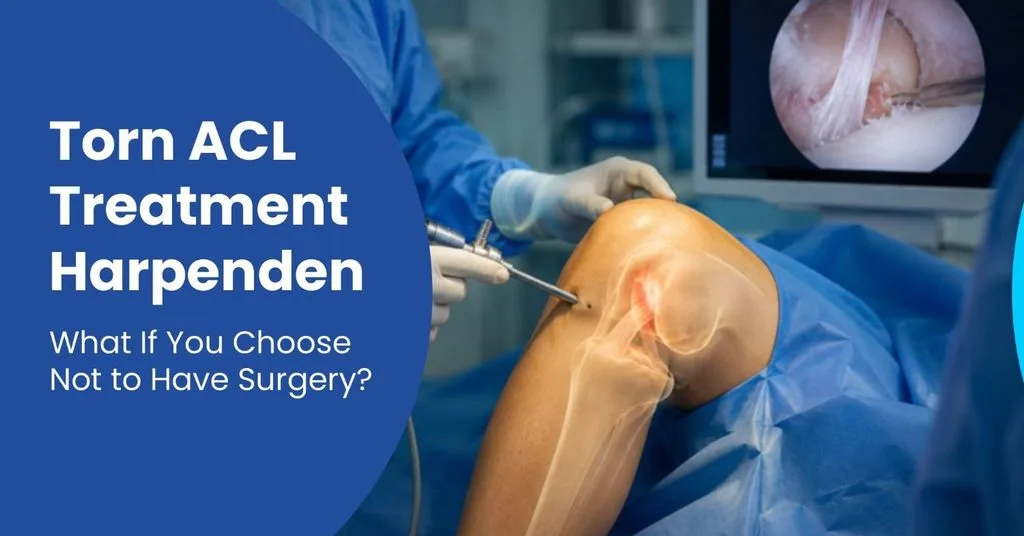
The operation is generally performed using arthroscopic techniques. A small camera allows the surgeon to examine the inside of the knee through small incisions, while specialised instruments are used to carry out the reconstruction.
The surgeon places the graft to recreate the function of the original ACL and secures it in position. The knee is then assessed before the procedure is completed.
ACL reconstruction is designed to improve stability, but it cannot guarantee that the knee will return to exactly the same condition it was in before the injury. Recovery takes time, and rehabilitation is essential.
As with any operation, there are potential risks. These can include infection, stiffness, ongoing pain, persistent instability and problems affecting the graft or the area from which it was taken. Your consultant should explain the relevant risks and answer your questions before you decide.
The operation is one stage of treatment. What happens over the following months is just as important.
ACL Reconstruction Harpenden: Why the Choice of Surgeon Matters
Knee ligament injuries can involve more than a single torn structure. An ACL tear may be accompanied by a meniscus injury, cartilage damage or other problems that affect knee function.
A surgeon who regularly treats sports injuries and knee ligament conditions can assess these issues as part of the wider treatment plan.
Mr Ravi Popat is a Consultant Specialist Hip and Knee Surgeon at Herts Hip & Knee. His specialist practice includes sports injury reconstruction, knee ligament surgery, knee arthroscopy and procedures involving the meniscus and cartilage.
He has completed specialist training in sports injuries and joint surgery at centres including the University of Sydney’s Royal Prince Alfred Hospital, Guy’s and St Thomas’ NHS Foundation Trust and Oxford University Hospitals. He also holds a consultant post at West Hertfordshire Teaching Hospitals NHS Trust.
For patients considering ACL reconstruction, this experience is relevant because the decision may involve assessing several parts of the knee, not simply confirming a ligament tear.
The consultation should establish what needs treating, whether surgery is appropriate and what recovery is likely to involve. It should also give you the opportunity to discuss your own priorities, whether that means returning to competitive sport or feeling confident on everyday walks.
Preparing for ACL Surgery
If you decide to proceed with reconstruction, preparation usually begins well before the operation.
Your surgeon or physiotherapist may recommend exercises to improve knee movement and strengthen the surrounding muscles. Reducing swelling and regaining as much comfortable movement as possible before surgery can also help prepare you for rehabilitation.
This preparation is worth taking seriously. You will be working to restore strength and control after the operation, so starting from a better level of movement and muscle function can be helpful.
There are practical matters to organise as well.
You may need someone to take you home after surgery and help with certain tasks during the first few days. If your job involves standing, lifting, climbing or physical work, discuss your likely time away from work with your clinical team. Desk based work may allow an earlier return, depending on your recovery and the arrangements available to you.
Your preoperative assessment will cover your medical history, medication and fitness for surgery. It is also the right time to ask about the procedure, pain management, follow up appointments and rehabilitation.
Knowing what to expect makes it easier to plan realistically.
Knee Arthroscopy Harpenden: Treating Associated Knee Damage
Arthroscopy is a keyhole surgical technique that allows the surgeon to examine and treat certain problems inside the knee.
It is commonly used during ACL reconstruction. It also allows the surgeon to assess the meniscus and cartilage, which may have been injured at the same time as the ligament.
A meniscus tear, for example, can cause pain, swelling or catching within the joint. Whether it needs treatment depends on its location, pattern and severity, as well as the condition of the knee as a whole.
Not every meniscus injury requires surgery, and arthroscopy is not suitable for every knee problem. The procedure should be recommended only when the findings and symptoms support it.
Mr Popat’s practice includes knee arthroscopy and meniscus surgery alongside ligament reconstruction. This means patients can discuss associated knee problems as part of their assessment rather than treating the ACL injury in isolation.
Sports Injury Surgeon Harpenden: Returning to Activity Safely
For many patients, returning to sport is the main reason for considering ACL reconstruction. For others, the goal is more straightforward: walking confidently, using stairs without concern or taking part in exercise without fearing that the knee will give way.
Either way, recovery needs to be planned around function rather than a date on the calendar.
Early rehabilitation focuses on swelling, movement and muscle activation. As the knee progresses, the programme develops to include strength, balance, coordination and more demanding movements.
Running, jumping and changing direction place different demands on the knee. Being comfortable walking does not necessarily mean you are ready for these activities.
Returning to competitive sport may take many months, sometimes up to a year. The timing depends on the individual, the procedure and progress through rehabilitation. Your surgeon and physiotherapist will advise when it is appropriate to move to the next stage.
There is little benefit in rushing back before the knee is ready. A carefully managed return gives you the best opportunity to rebuild confidence and reduce the risk of another injury.
Torn ACL Treatment Harpenden: What If You Choose Not to Have Surgery?
For selected patients, non-surgical treatment remains a reasonable option.
A physiotherapist can develop a programme to improve strength, balance and control. You may also need to adapt activities that repeatedly cause instability. The aim is to help the knee function as well as possible without reconstruction.
However, rehabilitation cannot restore a completely torn ACL to its original structure. If the knee continues to give way despite appropriate treatment, or if your activities require greater rotational stability, you may need to revisit the decision about surgery.
The choice is not necessarily permanent. Your symptoms, goals and response to rehabilitation can help guide further discussions with your consultant.
If you are unsure whether reconstruction is necessary, an assessment with an ACL Specialist Harpenden can help you weigh the options without assuming that an operation is inevitable.
Choosing Specialist Knee Care in Harpenden
Finding a local consultant is useful, but the quality of the assessment matters more than the distance from home.
You should be able to discuss your injury with someone who understands knee ligament conditions, explain what you want to achieve and receive a clear account of the treatment options.
At Herts Hip & Knee, Mr Ravi Popat sees patients at Spire Harpenden Hospital and other clinics in Hertfordshire. His practice covers knee ligament reconstruction, arthroscopy, sports injuries and other hip and knee conditions.
For patients in Harpenden and nearby areas, this provides access to specialist assessment without needing to travel into central London. More importantly, it offers an opportunity to discuss the injury and understand whether reconstruction, rehabilitation or another approach is appropriate.
If surgery is recommended, ask about graft options, risks, the rehabilitation programme, and likely restrictions during recovery. These details will help you make an informed decision.
Frequently Asked Questions
When Should I See an ACL Reconstruction Surgeon Harpenden?
Seek an assessment if your knee remains unstable after an injury, repeatedly gives way or continues to limit your activities. A specialist can examine the knee, review any scans and explain whether rehabilitation or reconstruction may be appropriate.
Does Every Torn ACL Need Surgery?
No. Some people can manage an ACL injury with structured physiotherapy and activity changes. Surgery may be considered when instability persists, when other knee structures are injured or when the patient wants to return to activities that place greater demands on the knee.
How Long Does Recovery from ACL Reconstruction Take?
Recovery takes several months. Returning to demanding sport can take up to a year, depending on the individual and their progress. Physiotherapy is essential, and your treating team will guide your return to activity.
Can I Return to Sport After ACL Reconstruction?
Many patients work towards returning to sport, but this cannot be guaranteed. Your knee needs to regain adequate strength, control and function before you return to demanding activity. Your surgeon and physiotherapist will advise when you are ready.
What Happens at an ACL Consultation?
Your consultant will discuss how the injury occurred, review your symptoms and examine the knee. Scans may be reviewed or arranged if needed. You can then discuss the treatment options, including the potential benefits and limitations of surgery.
Arrange an ACL Consultation at Herts Hip & Knee
An ACL injury can leave you uncertain about what your knee will be capable of in the months ahead. The first step is to establish the extent of the damage and understand which treatment options are realistic for you.
At Herts Hip & Knee, Mr Ravi Popat provides specialist assessment for knee ligament injuries, including ACL reconstruction and arthroscopic treatment where appropriate. His experience in sports injury reconstruction and wider knee surgery allows the discussion to take account of associated injuries as well as the torn ligament itself.
If your knee is repeatedly giving way, you have been diagnosed with an ACL tear or you are unsure whether surgery is necessary, arrange a consultation to discuss your options.
Contact Herts Hip & Knee to book an appointment with Mr Ravi Popat at Spire Harpenden Hospital and take the next step towards managing your knee injury.
Website: https://hertshipandknee.com/
Telephone: +44 1582 328476
Location: Spire Harpenden Hospital, Ambrose Lane, Harpenden, AL5 4BP.