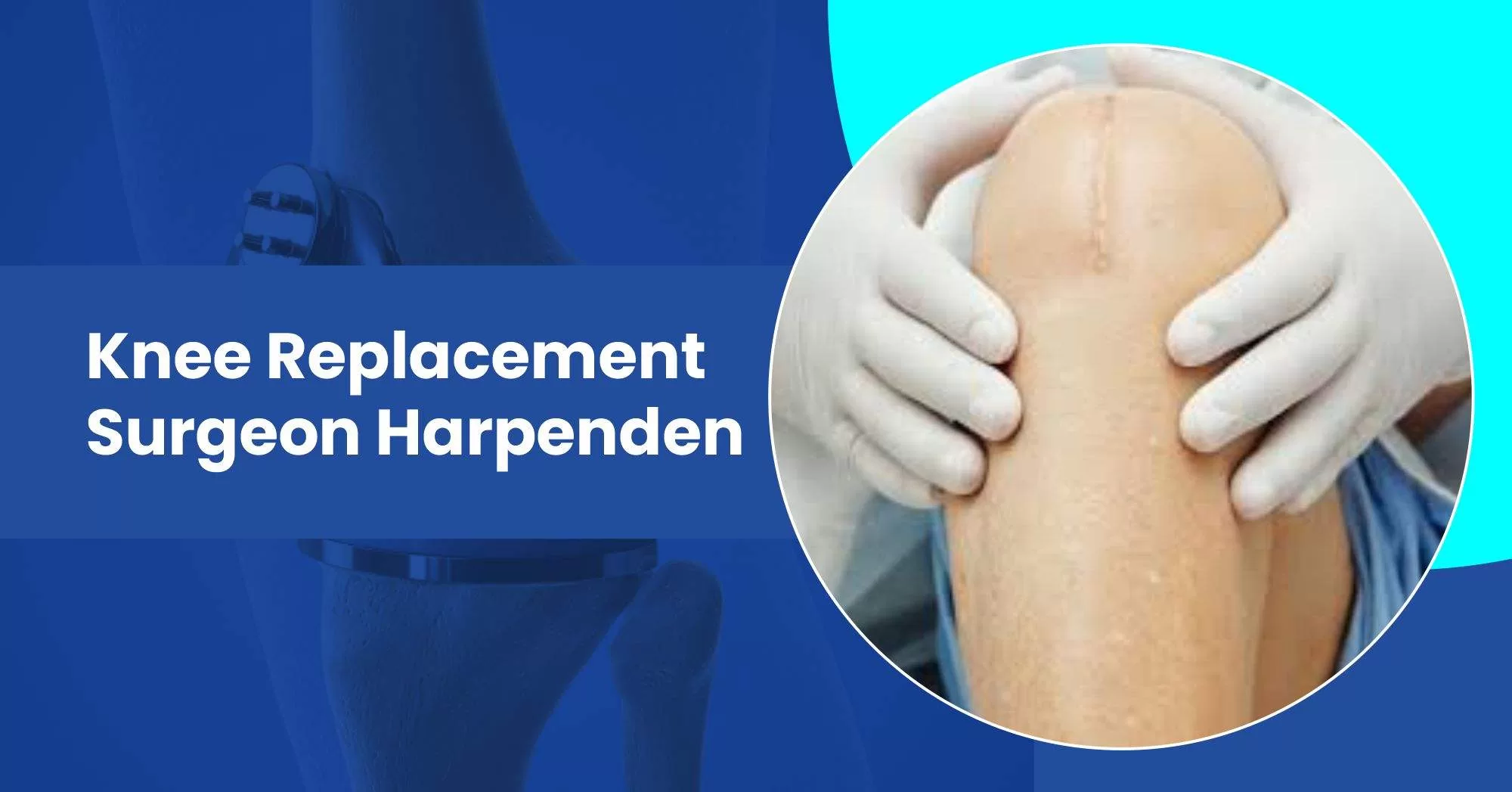
A painful knee can alter your daily activities for the worse. People living with knee pain may begin to avoid stairs, exercise, going out, and even accept that every step will hurt.
When this becomes your routine, a visit to a Knee Replacement Surgeon Harpenden patients trust may provide you with some insight into what is happening inside the joint.
Knee Replacement Surgeon Harpenden: When Do You Need Surgery?
Not everyone is a candidate for knee replacement surgery, and just because you have arthritis on an X-ray does not mean surgery is the answer.
Once your symptoms, mobility, lifestyle, and expectations have been assessed, it becomes important for you and your surgeon to discuss the available treatment options.
Not All Knee Pain Means You Need a Replacement
One of the biggest factors leading people to consider knee replacement surgery is arthritis. As the joint changes, the cartilage that covers the knee and enables smooth movement can become damaged. With cartilage loss, stiffness can develop, along with pain and a reduction in the available range of knee movement.
An arthritic knee does not automatically mean that surgery is necessary.
Many people continue to manage their pain and maintain a good quality of life with or without surgery through physical therapy, medication, and other non-surgical treatments. Unfortunately, for some people, pain can eventually become difficult to tolerate.
A pain-free walk may become less and less achievable. Getting out of a comfortable chair can become an arduous task. Lack of sleep may begin to disturb your routine. Things you used to love may become activities you avoid.
Often, when people begin researching Knee Surgeon Harpenden, they start to consider whether knee replacement surgery is an option.
The question should not be:
“Is my knee badly worn?”
It should be:
“How badly does my knee affect my daily life, and what is the best course of action for me?”
There is a big difference between the two.
An X-ray can provide some indication of joint degeneration, but it cannot fully explain how you feel or how your symptoms affect your life. People with the same degree of X-ray degeneration can experience very different levels of pain and have very different expectations from surgery.
It is important to have a consultation with a specialist before making a decision about surgery.
An appointment with a knee replacement specialist is not simply a discussion about having an operation.
It is an opportunity to determine the cause of your symptoms and consider whether a replacement is actually justified.
Mr Ravi Popat is a Consultant Specialist Hip and Knee Surgeon with a practice focused on joint replacements, sports knee surgery, and soft tissue knee problems.
His areas of specialist interest include partial knee replacement, computer-assisted knee replacement surgery, reconstruction of knee ligaments, meniscal repairs, cartilage problems, and the treatment of unstable knees.
The breadth of his specialist interests is important because the cause of knee pain can be more complex than it first appears.
During an assessment, your surgeon will be interested in several areas:
-
The location of your pain
-
How long you have had your symptoms
-
Your pain levels while walking, standing, or using stairs
-
Feelings of stiffness or instability in your knee
-
How far you can walk comfortably
-
Whether your pain is keeping you from sleeping
-
Whether you have stopped participating in any activities
-
Whether the knee has previously been injured or operated on
-
The treatments you have already tried
-
What you want to be able to do again
Assessing your knee and reviewing the appropriate scans or X-rays will add further detail to the assessment.
Pain in the knee area can have many causes. While X-rays may not provide a complete explanation, this information can help your surgeon plan the most appropriate treatment.
It can indicate whether further diagnostic studies may be needed, whether conservative treatments can be started, and whether surgery should be considered if necessary.
Replacement, particularly for knee osteoarthritis, may be considered when pain is limiting your lifestyle, you are having difficulty walking, stiffness is limiting your mobility, pain is interfering with your sleep, daily activities or hobbies, conservative measures are not sufficient, or arthritis and other joint disease are having a significant impact on your function.
Surgery may also be considered when pain remains uncontrolled despite trying appropriate available treatments.
Remember, this choice is yours and yours alone.
Someone who enjoys walking or running several miles a day may experience significant discomfort from symptoms that limit someone else from walking a shorter distance. Other goals may be more important to someone whose main priority is simply being able to walk around the house without pain.
A good consultation takes an individual’s goals into account and explains why certain symptoms may be limiting their daily life.
Knee Replacement Surgery Harpenden: Understanding Your Options
When surgery becomes the only option, the term “knee replacement” does not describe the same operation for every patient.
The two main types of knee replacement surgery are total knee replacement and partial knee replacement. In some cases, robotic technology can also be used.
The overall health and condition of the knee determine which approach is most appropriate, rather than simply choosing what may appear to be the most advanced option.
Total Knee Replacement
A total knee replacement is typically used when the majority of the knee joint has been damaged in more than one location by arthritis or other causes.
The worn joint surfaces are replaced with prosthetic components to reduce pain and restore joint function, while helping the patient return to everyday activities.
This surgery should be considered carefully, as it is a serious procedure.
Partial Knee Replacement
If the damage caused by arthritis is contained within one section of the knee, a partial knee replacement may be suitable. If the surrounding tissues of the knee are healthy, a partial replacement may be used to restore knee function.
Not all patients are suitable for this surgery. Other factors include the condition of the surrounding tissues, joint mobility, and the overall functionality of the knee joint.
Partial knee replacement is one of Mr Popat’s special interests, and it is listed among his specialist interests by the NHS and specialist treatments by Spire Healthcare.
Keeping as much of the natural joint as possible can be an advantage for some patients.
Of course, that does not make a partial replacement a better option for everybody. A total replacement may still be the best option for some patients.
What About Robotic Assisted Surgery?
When researching private knee replacement surgery, many potential patients are interested in robotic-assisted surgery for understandable reasons.
Of course, it is important to understand what the technology actually does.
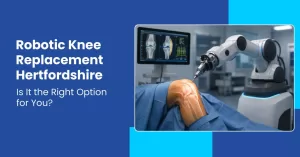
A robot does not perform the surgery. The surgeon remains in charge of the procedure. With robotic-assisted surgery, the system can help the surgeon plan and perform the surgery using more detailed information about the patient’s anatomy.
Mr Popat specialises in joint replacement procedures assisted by robotic technology. He uses robotic-assisted surgery when he believes it may help improve the surgical outcome for the patient.
Rather than simply considering robotic surgery to be better, it is more useful to understand how the technology can be used appropriately.
The real focus should be on the technology and its optimal use for the individual patient.
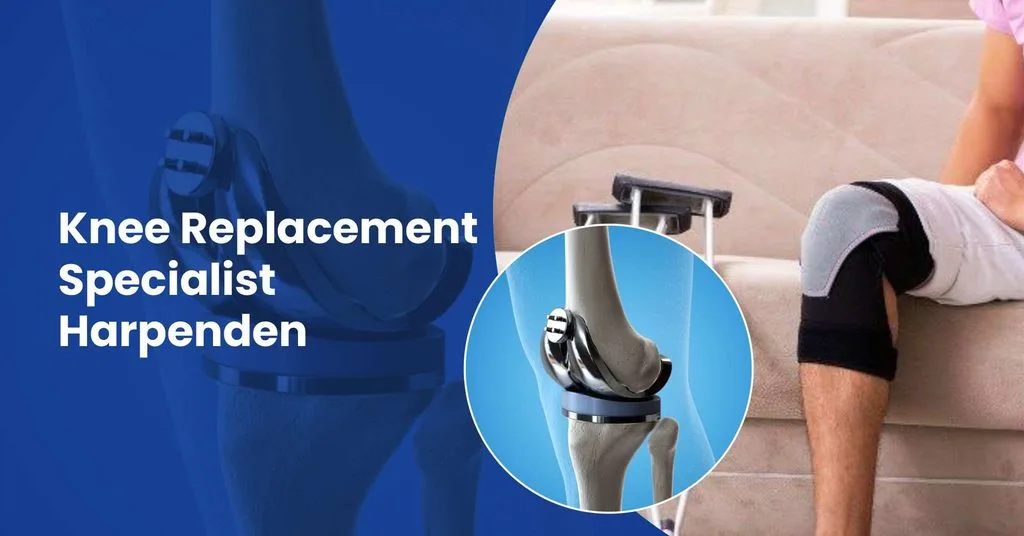
Knee Replacement Specialist Harpenden: Why the Surgeon Matters
It is understandable that when a knee replacement is being considered, patients look into the hospital, the technology used during the procedure, and the specific type of replacement.
However, the surgeon’s experience and specialisation should be equally important.
Mr Popat has an MD Res from Imperial College London and FRCS in Trauma and Orthopaedics. He completed fellowship training in adult joint reconstruction and sports surgery, including time at Royal Prince Alfred Hospital in Sydney, followed by further joint reconstruction and sports surgery training at Guy’s and St Thomas’ and Oxford University Hospitals. He joined the Hip and Knee unit at West Hertfordshire Teaching Hospitals NHS Trust in 2023.
His current NHS specialist interests include robotic joint replacement, unicompartmental knee replacement, total knee replacement, total hip replacement, day case joint replacement, and sports knee injuries involving ligament reconstruction and meniscal repair.
It is important to note that knee replacement surgery is only one part of the wider knee surgery picture.
A specialist who routinely addresses sports injuries, cartilage, meniscal, and ligament problems will also be familiar with situations where knee replacement may not be the only, or the most logical, course of action.
Mr Popat describes his approach as both operative and non-operative, with an emphasis on preserving the natural joint.
For a patient, that can make an important difference to the conversation.
Your question is not simply:
“Can you replace my knee?”
Your question is more like:
“What can you do to fix my knee?”
This is a more productive approach.
What Does Complete Knee Replacement Recovery Entail?
Many patients focus on recovery time and when they will be able to return to activities of daily living, such as walking, driving, and returning to work.
Everyone recovers at their own pace, and there is no set recovery timetable. Recovery depends on the surgery, your medical condition and physical condition before surgery, how your knee heals, and how active you are.
Rehabilitation is a large part of the process.
After surgery, the focus is generally on:
-
Improving movement of the knee
-
Building strength
-
Walking
-
Managing swelling
-
Becoming active with daily tasks
-
Returning to normal activities
This process can be supported through physiotherapy.
It is better to prepare for recovery before surgery rather than waiting until afterwards to begin thinking about rehabilitation. The process can be much easier to manage when you understand what recovery involves, organise the necessary support, and understand the reason behind the exercises.
The West Hertfordshire Teaching Hospitals NHS Trust provides patient information on preparing for day case knee replacement and recovering after orthopaedic surgery. This reflects the importance of preparation and rehabilitation throughout the patient journey.
Your rehabilitation team and surgeon will provide specific guidance based on your surgery and individual recovery.
Private Knee Replacement Harpenden: What Should You Look For?
Choosing private surgery should not be about who can see you the quickest. There are other important factors to consider.
Who Is The Surgeon?
Look at their qualifications, specialist training, and areas of surgery.
Where Does the Surgeon Work and Where Do They Perform Surgery?
Look at the hospitals and facilities where they carry out consultations and surgical procedures.
Does The Surgeon Perform Your Type of Surgery?
If you are considering partial or robotic knee replacement surgery, ensure that the surgeon has relevant experience in these areas.
Will You Have the Option of Other Treatments?
Your consultation should provide an opportunity to discuss other treatment options and should not suggest that surgery is the only choice.
Are Questions Encouraged During the Consultation?
You should feel able to discuss all your concerns about surgery during your consultation, including pain, recovery, and potential complications.
Spire Healthcare states that Mr Popat practises as a Consultant Specialist Hip and Knee Surgeon at Spire Harpenden Hospital and Spire Bushey Hospital, with a particular interest in hip and knee replacement, robotic assisted surgery, partial knee replacement, knee ligament reconstruction surgery, and knee arthroscopy.
His specialist focus includes private hip and knee surgery in and around Harpenden and Hertfordshire.
Why Herts Hip & Knee?
Herts Hip & Knee is a specialist practice focused on lower limb joint problems.
The practice’s consultations are based in Harpenden, and Mr Popat also works at Spire Harpenden Hospital and Spire Bushey Hospital.
The practice’s services include non-surgical management of arthritis, joint replacement surgery, partial joint replacement including robotic-assisted surgery, sports injuries and knee surgery, ligament surgery, knee preservation surgery, and arthroscopy.
That focus allows the conversation to stay centred on the issues that matter to the patient.
A specialist consultation can help address the next steps for managing pain when knee problems begin restricting your activities. This may involve rehabilitation, non-surgical treatment, joint preservation, partial knee replacement, or total knee replacement.
The aim of the consultation is not to persuade you to choose surgery.
The aim is to identify what your knee needs.
Knee Replacement Treatment Harpenden: Patients’ Frequently Asked Questions
What Are the Signs That I Need A Knee Replacement?
Pain and stiffness, along with decreased mobility, may be reasons to consider knee replacement. However, the final decision may depend on a combination of your symptoms, physical examination, imaging, and the results of previous treatments. An X-ray alone does not determine whether you need surgery.
How Do I Select the Best Knee Replacement Surgeon In Harpenden?
Online professional ratings can sometimes be misleading. Factors to consider include qualifications, training, experience with the surgery, hospital affiliations, professional memberships, and how clearly your surgeon explains your treatment options.
Are Total Knee Replacements My Only Option?
This depends on several factors, but options may include non-surgical management, joint preservation, partial knee replacement, or total knee replacement. Your suitability for each option must be assessed individually.
What Is the Difference Between Partial and Total Knee Replacement?
With a partial knee replacement, only the damaged area of the joint is replaced. With a total knee replacement, the damaged surfaces of the joint are replaced. The extent and pattern of joint damage, along with other clinical factors, influence this decision.
Is Robotic Knee Replacement Available for Everyone?
No, it is not. The technology assists with surgical planning and certain steps of the surgical process, but it does not replace the surgeon’s experience or clinical judgement. Mr Popat uses robotic surgery for knee replacement when he believes it is appropriate.
Where is the Knee Replacement Clinic in Harpenden?
Mr Popat performs knee replacements at Spire Harpenden Hospital and practises in Harpenden, where Herts Hip & Knee is located. Spire Hospital in Bushey also lists him.
What Is the Right Time to Consider Total Knee Replacement?
No one wants to live with pain, but there can come a time when you no longer want to live with the restrictions it creates.
If knee pain is limiting your movement, making walking uncomfortable, affecting your sleep, or stopping you from enjoying the activities you value, it may be time to have it assessed.
This should not be seen as an invitation to have surgery.
Instead, it is an opportunity to understand what is really happening, what options are available, and what the pain has taken away from your everyday life.
If you need a Knee Replacement Surgeon Near Harpenden, Herts Hip & Knee offers consultations with Mr Ravi Popat, who performs partial and total knee replacements, robotic joint replacements, knee surgery for sports injuries, and non-operative management of knee arthritis.
If you are considering private knee surgery in Harpenden, the first step can simply be to explain your knee pain and discuss what you believe may be causing it.
Herts Hip & Knee
Ambrose Lane
Harpenden
AL5 4BP
Tel: 01582 328476
Email: contact@hertshipandknee.com You can book a consultation to discuss your knee pain and explore the treatment options available to you.