
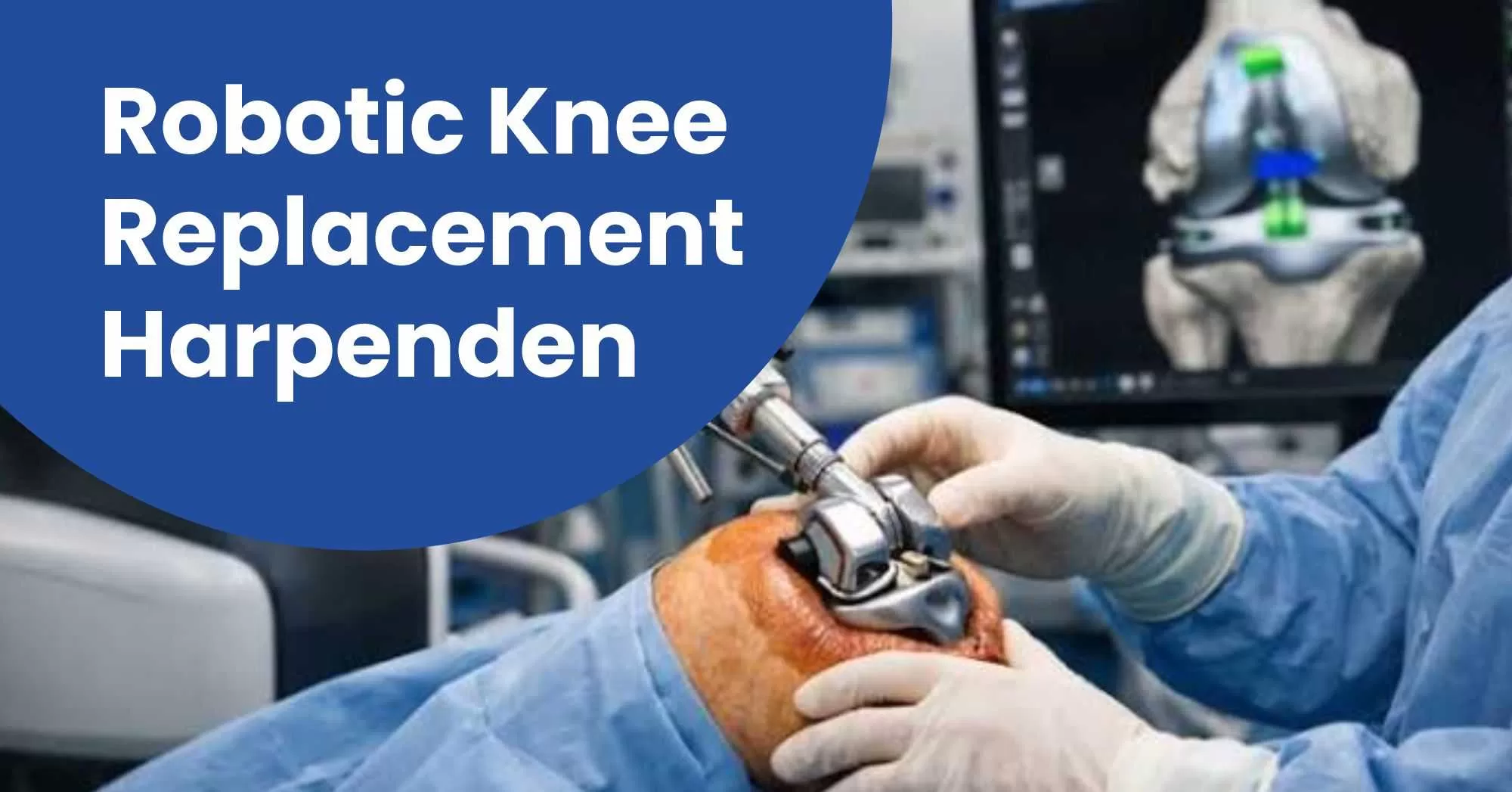
Decisions about Robotic Knee Replacement Surgery in Harpenden are seldom made overnight. People living with chronic knee pain often decide to consider this after a long period of suffering from chronic pain, stiffness, reduced mobility, discomfort while walking up stairs, difficulty exercising, or an inability to perform everyday activities. They may also have tried and exhausted all conservative treatments. At that time, it is advisable to consult a specialist for a thorough assessment of the knee pain. If the extent of the damage is assessed as severe, knee replacement surgery may be offered. Consultant Specialist Hip and Knee Surgeon Mr Ravi Popat has sound knowledge of joint replacement surgery and robotic surgery and performs such procedures when he feels this approach is safe and appropriate for his patients.
When Knee Pain Starts Changing the Way You Live
Some cases of knee arthritis begin without any warning.
Your knee pain may start by aching after long periods of standing. You may start skipping your morning workout because you know your knee is going to feel it. Or perhaps you avoid going to dinner with your friends because you know you cannot sit comfortably on the couch afterwards. You start avoiding climbing the stairs. That pain begins to control what activities you can do for the rest of your day.
A lot of people do not think to address this pain.
Many people blame chronic injuries, normal signs of ageing, or the strain they have put on their body over the years. Some try to adjust their routine to accommodate the pain without even realising that it has completely taken over.
There comes a point when managing the knee becomes part of your daily routine.
You will probably take pain medication more frequently, avoid exercise because it may be painful, begin to feel stiff after prolonged sitting, and notice that your knee no longer straightens and bends to the same degree of comfort as it did before.
These symptoms do not necessarily mean you require a knee replacement.
Knee pain can have many different causes. Treatment also varies depending on the cause. Some of the most common reasons people opt to have knee replacements include osteoarthritis, knee injuries, cartilage damage, meniscal injuries, ligament problems, and many other conditions that affect the knee.
The correct approach is to rule out the need for surgery where possible.
What Does Robotic Knee Replacement Mean?
Robotic knee replacement does not involve a robot performing the surgery.
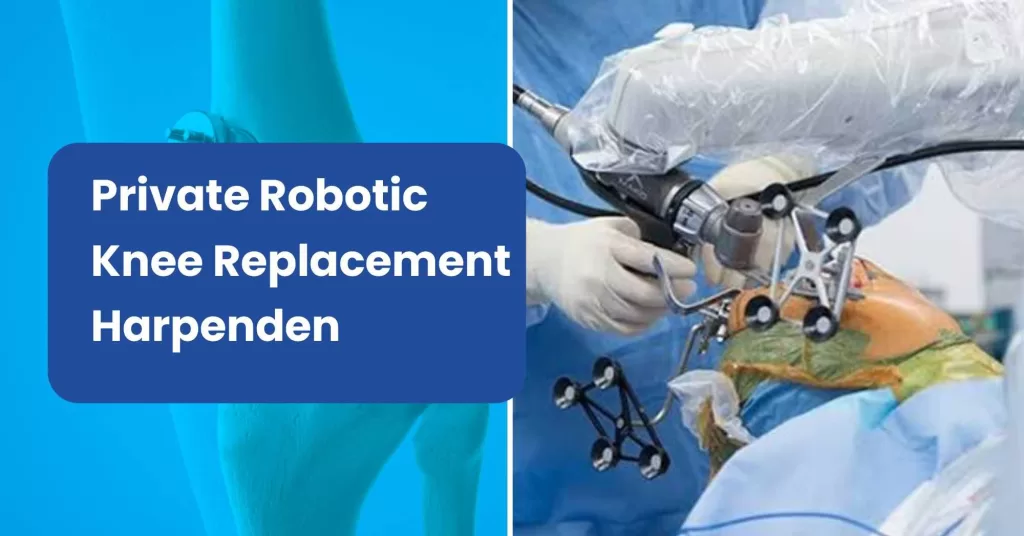
Robotic surgery involves the use of technology to assist the surgeon at various stages of the surgery. The level of assistance that the technology provides is determined by the robotic surgery system being used. The surgeon is fully responsible for the surgery.
The machine only provides assistance, and the surgeon has to make the final clinical decision.
Mr Ravi Popat has worked on the local robotic joint replacement programme at West Hertfordshire Teaching Hospitals NHS Trust. The Trust describes how its CORI robotic system develops a real time 3D model of the patient’s anatomy, aiding surgeons in the placement of hip and knee implants.
This is significant.
Robotic assisted surgery should not alter the importance of the medical professional. Instead, it should be viewed as a tool that can enhance surgical interventions.
It may be one of the many options for some patients needing knee replacement surgery. For others, standard surgery may be the best option.
The decision to have knee replacement surgery should not be based solely on the availability of the latest technology.
Who May Be Eligible for Robotic Knee Replacement in Harpenden?
There is no clear-cut decision guide to determine whether you may be eligible for robotic knee replacement.
The specialist will assess the problem and form an opinion.
This may include asking you to describe your problems and symptoms. How long have you had pain? How severe does the pain become? Are you able to walk without pain? Are stairs challenging to navigate? Has your knee become swollen? Are you having difficulty sleeping? Have you stopped doing the activities that were once the most important to you?
Your general health also plays a role.
The specialist will consider your previous knee problems, injuries, operations, and the medication you take.
All of these things influence the decision.
Physical assessments help the surgeon understand things such as knee movement, how stable the knee is, and how well aligned the knee is. From these observations, surgeons can understand what is happening inside the joint.
Once these assessments and X rays are done, the damage to the joint can be assessed.
After these assessments are completed, treatment options can then be discussed.
For some patients, the next step could be physiotherapy, certain medications, adjustments to their activities, or other treatments that are not surgical. However, for patients who have severe arthritis that is causing significant pain, knee surgery could be discussed.
Meeting with a specialist does not mean you will be offered surgery.
A good consultation should make it clear whether surgery is actually needed.
The Role of Technology and the Surgeon
The focus of surgical robots is usually on the technology.
The surgeon should not be ignored.
Mr Ravi Popat is a specialist hip and knee surgeon who specialises in joint replacement and sports surgery. His areas of interest include knee joint replacement, robotic joint replacement knee surgery, and knee preservation.
This experience is important because operating a robotic system is more than just pressing buttons.
It requires the surgeon to understand the patient’s anatomy, the condition of the joint, and the purpose of the surgery. Although the technology provides additional information, it still needs to be interpreted within the overall context of the surgery.
Mr Popat’s practice incorporates non-surgical management and sports injuries, as well as partial and total joint replacements. His stated approach is to consider a range of options in an attempt to avoid surgery and maintain the natural joint.
For patients, this means that the initial discussion does not need to be about surgery. It can be about determining the best course of treatment for the specific knee.
Robotic Knee Replacement Harpenden: Understanding the Surgical Decision
Assuming robotic surgery is better surgery is a common mistake.
However, it is not that simple.
Robotic surgery only provides extra guidance to the surgeon and does not eliminate the need for patient selection.
Prior to surgery, your surgeon may review the following: the extent of your knee arthritis, the misalignment of your knee, your activity level, your existing health conditions, your previous knee surgeries, the overall health of your knee, and whether you may qualify for a partial knee replacement.
The decision regarding surgery is then discussed in light of your overall health.
Mr Popat has a particular interest in partial and total knee replacement, robotic surgery, and knee replacement surgery. His professional profile lists knee preservation and sports injury reconstruction as other areas of special interest.
This range of experience is helpful when a decision can be complex.
The decision should not just be whether to offer surgery.
The decision should be to offer a surgical pathway that provides the patient with the best course of action.
What Is Recovery Like After a Knee Replacement?
There are many factors involved in recovery, and the timeline can vary from person to person. These factors can include the condition of your muscles, your general health, your age, and how dedicated you are to the rehabilitation process.
The first phase of recovery involves getting the patient to slowly mobilise again and gradually increase daily activities. Therapy will aid the patient with strength and movement of the knee and help regain the confidence to perform daily activities.
Initially, the patient may require support throughout the day to perform daily activities. Progressive increases in daily activities are possible as the patient’s mobility recovers.
It should be noted that a returned sense of wellbeing does not always equate to full recovery. Returning confidence and strength may take longer than the reduction in pain. The rehabilitation process should not be ignored while the patient awaits a full return to wellbeing.
Herts Hip & Knee provides individualised rehabilitation support to help patients recover and regain strength and mobility following treatment or surgery.
The process of recovery takes into account the goal you wish to achieve. Recovery may be considered successful by some as being able to walk pain free within their neighbourhood, while others may require recovery for the purpose of re engaging in sport and recreational activities or adopting a more active lifestyle.
These goals may be achieved prior to surgery. When choosing a surgeon, it is crucial to consider the surgeon’s qualifications, experience, and the technology available.
Does the Surgeon Listen?
An effective consultation should provide you with the opportunity to present your symptoms and ask questions regarding the suggested treatment.
You should be able to understand the reasons behind the recommended course of action.
You should also be able to understand the alternatives.
Mr Popat claims to have a patient centred approach that focuses on clear communication of treatment and consideration of both surgical and non surgical treatment options. Spire Healthcare calls him a Consultant Specialist Hip and Knee Surgeon and confirms that he specialises in hip and knee replacement surgery and robotic-assisted surgery.
His NHS position is also relevant. West Hertfordshire Teaching Hospitals NHS Trust lists robotic joint replacement, unicompartmental knee replacement, and total knee replacement as special interests.
For patients in Harpenden and the surrounding areas of Hertfordshire, Herts Hip & Knee offers specialist consultations at Spire Harpenden Hospital, with additional clinics at Bushey and Hemel Hempstead.
This makes local access another important consideration when planning assessment, surgery, and follow-up.
Private Robotic Knee Replacement Harpenden: What Should Patients Consider?
Choosing private care is an individual’s choice.
Some patients like that they can arrange prompt access to treatment and consultation in a private hospital. Others appreciate the convenience of arranging treatment around their own schedule.
Ultimately, you should be satisfied with the treatment and care that you receive.
Before anything else, inquire about the specifics of the procedure, the rationale behind the recommendation, the type of implant, the recovery process, and the post operative follow up.
You must also ask whether robotic-assisted surgery is appropriate in your situation.
A specialist has a duty to explain the reasons for recommending robotic assisted surgery over traditional surgery.
Spire Healthcare confirms that Mr Popat performs knee replacement surgery at Spire Harpenden Hospital and Spire Bushey Hospital.
What Should You Ask at Your Consultation?
Having a few questions prepared tends to increase the efficiency of a consultation.
Some topics worth considering are:
• What is the cause of my knee pain?
• How severe is the damage?
• Are there other options to invasive surgery that I should try first?
• Do I need a partial or total knee replacement?
• Should my knee be replaced using robotic surgery?
• What are the pros and cons of the surgery?
• What will the recovery period be like?
• What are my postoperative therapy expectations?
• When can I return to my usual daily activities?
• What is the post-surgery recovery plan?
Knowing the answers will help you determine an appropriate course of treatment based on your specific needs rather than information you have researched on your own.
Frequently Asked Questions
Is Robotic Knee Replacement Harpenden A Surgical Option for Every Patient with Knee Arthritis?
Robotic surgery is not recommended for all patients experiencing symptoms of arthritis. Robotic surgery may be a potential option for you, but you should take into consideration your symptoms and history, as well as the expected outcome of surgery.
Is A Machine Doing the Knee Replacement?
No. The surgeon performs the replacement. Machines and technology are used during the planning phase as well as during the procedure. During the surgery, the machine provides information and assistance, but the surgeon retains responsibility for all clinical decisions and the execution of the surgery.
What Is So Different About Robotic Knee Replacement Compared to Other Surgeries?
The revolution in technology has brought about a lot of changes in surgery, including knee replacement surgery. Many other surgeries are now performed with the aid of robots and computers. The approach to surgery is now more patient-specific. Technology in no way replaces the surgeon’s years of experience or the judgement required during surgery.
If I Need a Knee Replacement, Will I Need a Total Knee Replacement?
Maybe not. Some patients can have a partial knee replacement, but total knee replacement is usually suggested if all the knee joints are damaged.
How Many Months Will It Take for Me to Recover from Knee Replacement Surgery?
It depends on the patient. There are many factors that affect recovery, including general health status, fitness and strength, age, and rehabilitation. Recovery is a personal process, and usually, the surgeon and physiotherapy team will provide more detailed information about the expected rehabilitation time.
Can Knee Arthritis Be Treated Without Surgery?
In some cases, yes. Depending on the severity of the condition, everything from medication and therapy to activity modification and other non surgical approaches can be attempted to treat knee arthritis. A surgeon may recommend surgery after assessing the severity of symptoms.
Specialist Knee Care in Harpenden
Having knee surgery is a decision that should be made after considering the severity of your symptoms, keeping in mind new technologies and considering your lifestyle expectations.
Most importantly, the treatment must be appropriate for your knee.
While robotic technology is an advancement in joint replacement surgery, it is used in conjunction with specialised assessment, planning, surgical expertise, and experience.
Mr Ravi Popat specialises in hip and knee surgery and sports injury reconstruction. He is a sub specialist in hip and knee surgery, joint replacements, and sports knee surgery, and has undergone specialised training in these subspecialties of knee surgery.
Residents of Harpenden and Hertfordshire have access to specialised assessments and treatment at the Harpenden clinic of Herts Hip & Knee at Spire Harpenden Hospital.
If knee pain is impacting your ability to perform your normal daily activities, a specialist assessment can inform you of the options available to you.
You may not need surgery.
If surgery is right for you, understanding the reasoning and whether the use of robotic technology applies to you can help lessen the concerns you may have about the surgical process.
Contact Herts Hip & Knee for a consultation to discuss your knee pain, treatment options, and whether robotic-assisted replacement is a viable option for you.